
Mountain Bike Suspension: Basic Setup and Maintenance
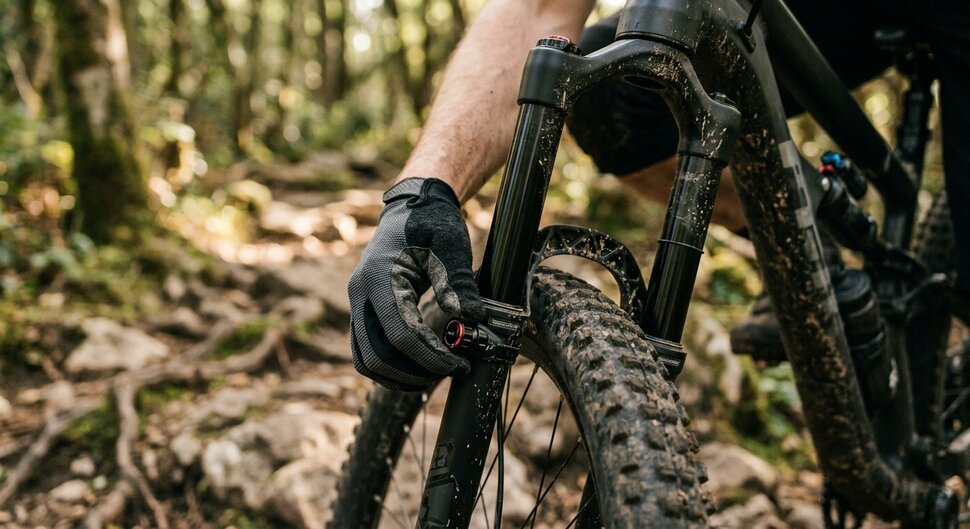
Poorly adjusted suspension can make a mountain bike uncomfortable, imprecise, and honestly just less fun to ride. Yet most riders are still running factory settings, without ever adjusting air pressure for their weight or riding style.
At RST Vélosports in Prévost, we often see riders surprised by how much of a difference a proper setup makes, especially on the technical, rocky trails you find in this region. Here are the basics of suspension setup, what to check regularly, and when it's better to bring it into our shop.
SAG: the foundation of every setup
SAG is how much your suspension compresses under your body weight, in your normal riding position. It's the starting point for any setup, before you even touch rebound or compression.
To measure it:
- Fully open your compression settings.
- Get on the bike with your usual gear, in your normal riding position.
- Settle down gently without bouncing the suspension.
- Measure the compression using the O-ring on the stanchion.
Reference values vary by component:
- Fork: aim for roughly 15 to 20% of total travel
- Rear shock: aim for roughly 25 to 30% of total travel
Too much SAG gives you soft suspension that dives too easily, while too little makes the bike harsh and less effective at absorbing impacts. On the root- and rock-covered trails you find in the Laurentians, well-dialed SAG makes an immediate difference in grip on technical descents.
Adjusting rebound
Rebound controls how fast your suspension returns to its starting position after a hit. A bad setting shows up quickly on the trail.
- Too fast: the suspension bounces back multiple times after an impact, hurting traction and creating an unstable feel
- Too slow: the suspension stays compressed too long and loses its ability to absorb the next hit
A good test is to roll over a small obstacle, like a curb or an isolated root, and watch how the suspension behaves. It should extend slightly past your SAG point on the way back, then settle without bouncing repeatedly. If that's not what happens, adjust one or two clicks at a time and test again.
Compression, for more demanding terrain
Compression controls how firm your suspension feels as it compresses. Most entry-level and mid-range suspension only offers a single compression setting, while higher-end models separate low-speed compression (slow movements, cornering, braking) from high-speed compression (sudden hits, big rocks).
For most riders on the Laurentians' trail networks, a mid-range low-speed compression setting is a solid starting point. Riders pushing further into enduro or downhill generally benefit from also adjusting high-speed compression to avoid harsh bottom-outs on bigger impacts.
Preventive maintenance you shouldn't skip
Even a well-dialed suspension setup will drift out of tune if basic maintenance gets ignored. A few simple habits go a long way toward extending its lifespan:
- Wipe down stanchions after every muddy ride to keep dirt away from the seals
- Check dust wiper seals, which wear faster in wet spring conditions
- Watch for oil or air leaks, a sign that more thorough maintenance is needed
As a general reference, basic maintenance is recommended roughly every 50 hours of riding, and a full service, including seal and oil replacement, every 200 hours. Riders who regularly ride in mud or sand should aim for the lower end of that range rather than the higher end.
When to bring it into the shop
A few signs suggest it's better to let a mechanic handle it rather than continuing to adjust it yourself:
- The suspension is visibly losing air or oil
- Rebound or compression no longer respond to adjustments
- An unusual noise appears during compression
- It's been more than 150 to 200 hours since the last full service
Our team in-store can do a full service on your fork or shock, or simply help you validate your settings based on your weight and riding style. You can check out our forks and shocks currently in stock, including high-end Fox models for those looking to upgrade their setup.
Suspension works with the rest of your bike
Suspension setup doesn't make up for everything. Incorrect tire pressure can make suspension feel too soft or too harsh, when the real issue is elsewhere. We explain how to choose mountain bike tires based on Laurentians terrain to avoid that confusion. In the same way, brakes that lack power on descents can push you to over-rely on your suspension to compensate. Our guide to maintaining SRAM mountain bike brakes covers that in more detail.
Quick FAQ
How often should I service my suspension?
Basic maintenance every 50 hours of riding, and a full service every 200 hours. Muddy or sandy conditions shorten those intervals.
What suspension pressure should a beginner use?
Start with the pressure recommended for your weight, listed on the stanchion or in the manufacturer's documentation, then adjust SAG from that starting point.
Why does my suspension feel too harsh even with good SAG?
Check your tire pressure first, since it directly affects how comfortable the ride feels. If the issue persists, your compression is likely set too firm for the terrain.
Conclusion
A good suspension setup always starts with SAG, continues with rebound and compression, and stays dialed in with regular preventive maintenance. On the technical, sometimes muddy trails of the Laurentians, these adjustments make a direct difference in comfort and control.
Our team at RST Vélosports can validate your settings or do a full service on your fork and shock. Come see us in-store in Prévost, or check out all our mountain bike components online.
Recent articles
View all
Mountain Bike Brakes Losing Power: Maintenance and SRAM Options
Mountain Bike Tires: Choosing the Right Ones for Laurentians Terrain