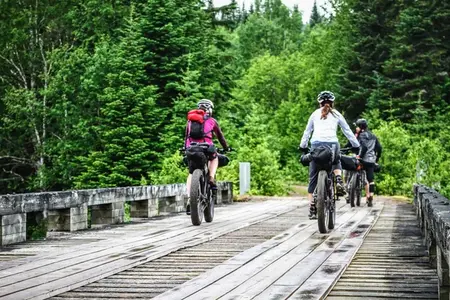
Mountain Bike Tires: Choosing the Right Ones for Laurentians Terrain
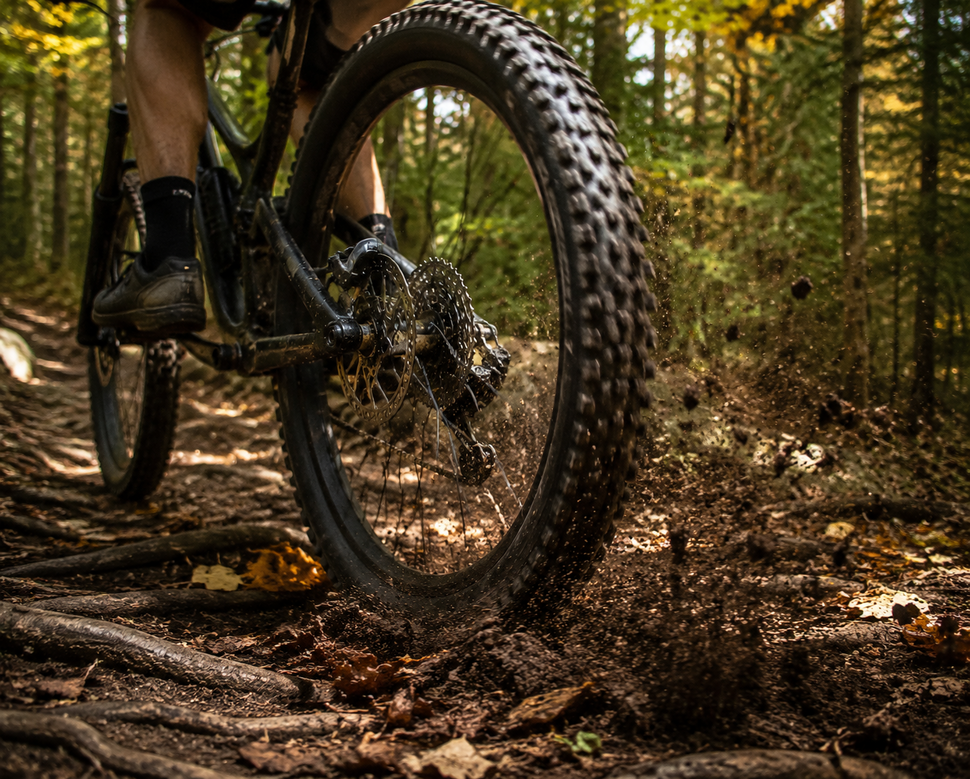
Choosing the right mountain bike tire starts with one thing: the terrain you actually ride. Roots, rocks, sand, spring mud. The trail networks in the Laurentians can change character from one section to the next, and the wrong tire can turn a great ride into a rough one just as easily as the right one can make your day.
At RST Vélosports in Prévost, we see everyone from families riding casually on the P'tit Train du Nord to experienced riders chasing every bit of traction on a descent. The right tire isn't the same for everyone. Here's how to figure out what's right for you.
Terrain first, tire second
Before thinking about a brand or model, ask yourself a simple question: where do you ride most often?
In our area, you'll typically find:
- Root- and rock-covered trails, common throughout the wooded networks in the Laurentians
- Mud and soaked soil in spring, especially right after the thaw
- Dry, hardpacked surfaces in summer on the faster, more flowing sections
- Gravel and packed dirt along the P'tit Train du Nord and its side trails
A single ride can easily cross three or four different surface types. That's why most riders in the region go with a versatile tire rather than an extreme one, unless they're riding almost exclusively downhill or enduro. For a look at some of our favorite local routes, check out the best bike trails in the Laurentians.
Understanding tread pattern
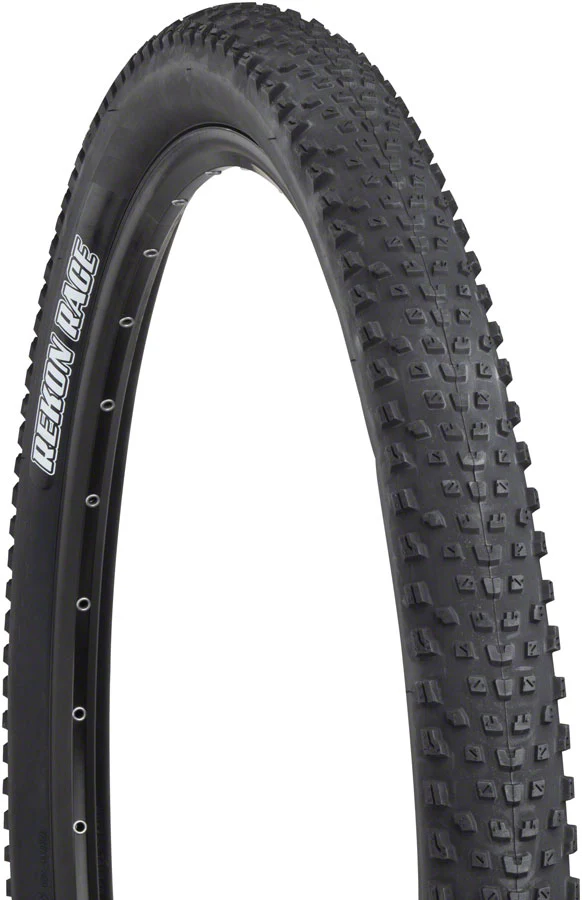
Tread pattern refers to the layout and height of the knobs, and it's what determines how the tire behaves on the ground.
The basics to know:
- Low, tightly spaced knobs: low rolling resistance and good efficiency, but less grip on loose terrain. Best for cross-country or dry, hardpacked trails.
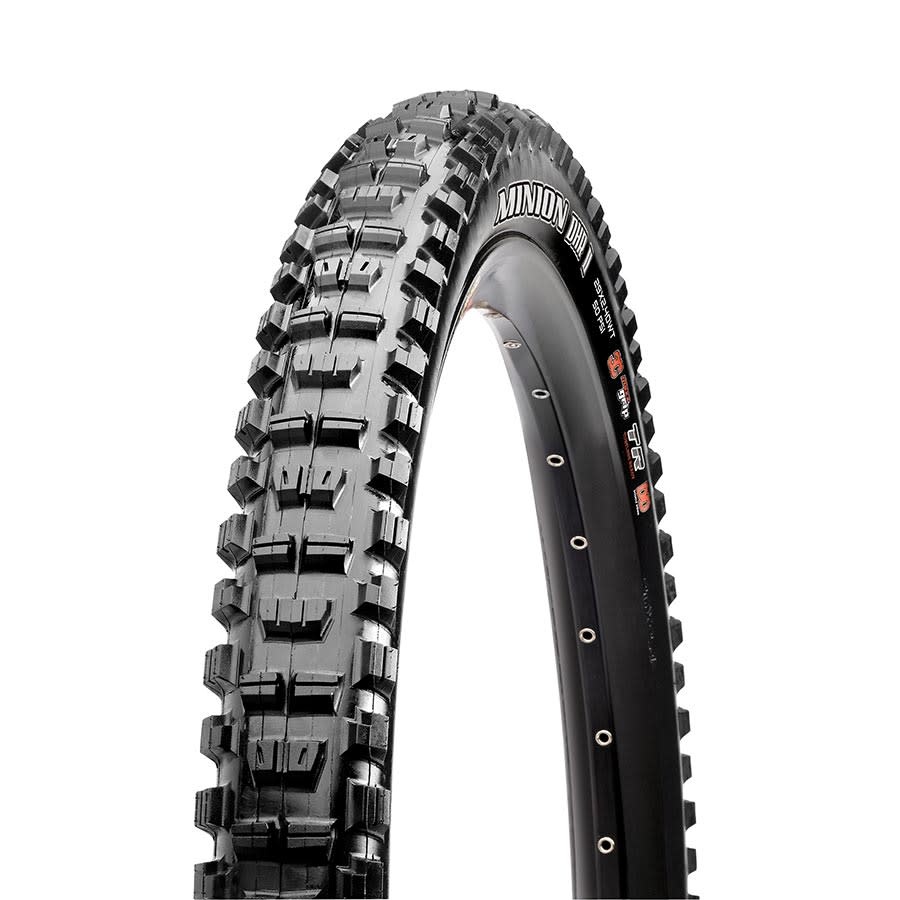
- Tall, widely spaced knobs: excellent traction in mud and over rocks, at the cost of efficiency on pavement or hardpack. Great for technical trail riding or enduro.
- Mixed tread: a reasonable compromise for riders who cross several terrain types in the same ride, which describes most riding in the Laurentians pretty well.
A tire with tall, widely spaced knobs also sheds mud faster, a real advantage during late-April and early-May rides when trails are still soaked.
Width, based on how you ride
Tire width affects grip, comfort, and overall wheel weight. For mountain biking, widths generally range between 2.1 and 2.6 inches.
- Cross-country and light touring: around 2.1 to 2.3 inches, for better efficiency
- Trail and all-mountain, the most common riding style in the region: 2.25 to 2.45 inches
- Enduro and downhill: 2.4 inches and up, for better impact absorption
Before switching to a wider tire, check what your frame and rims can actually accommodate. A rim that's too narrow limits the recommended tire width, and exceeding your frame's clearance can cause dangerous rubbing. If you're not sure, our team in-store can confirm what dimensions work with your bike before you buy.
You can check out our selection of mountain bike tires to see the widths and models currently in stock, including Maxxis options like the Rekon Race, Minion DHR II, or High Roller II depending on how you ride.
Tubes or tubeless
Most mountain bike tires sold today are designed to run tubeless.
The advantages of tubeless setups:
- Fewer pinch flats
- Ability to run lower pressure, which means more grip
- Better overall comfort on technical terrain
The trade-off is sealant maintenance and a slightly more technical initial setup. For most riders who ride our trails regularly, the traction gained is well worth the extra upkeep. Those who prefer simplicity can always carry a spare tube in their pack, just in case.
Pressure: the detail that changes everything
A lot of riders inflate their tires once a season and never touch them again. Yet it's one of the settings with the biggest impact on grip and comfort.
For a mountain bike, typical widths run between 2.2 and 2.6 inches, with recommended pressure generally falling between 18 and 30 psi tubeless, slightly higher with a tube, depending on rider weight and the type of ride, according to Vélo Québec's technical guide.
A few practical guidelines:
- Rocky terrain or wet roots: lower pressure slightly to gain grip
- A long climb on a less technical trail: bump pressure up a bit for better efficiency
- Riding with a pack or extra gear: add 2 to 5 psi
A good gauge makes all the difference here. Floor pumps often give an approximate reading at low pressure, which can throw off how the bike actually feels on the trail.
Different tire front and rear?
It's a common setup among trail and enduro riders: a different tire up front and out back. The front wheel steers, so grip and precision matter most. The rear wheel drives, so riders look for better efficiency and durability.
For more casual or family riding, which we see a lot of in the shop, running the same model on both wheels is more than enough. Mixing two different tires becomes more relevant for riders pushing their limits on descents or technical trails.
What about the rest of the bike?
Your tires never work alone. Incorrect pressure can also mask a setup issue elsewhere on the bike. If your brakes are struggling to bite on the long descents in the Laurentians, it's worth checking that at the same time as your tires. We cover that in more detail in our guide to maintaining SRAM mountain bike brakes. In the same way, poorly adjusted suspension amplifies traction loss over roots and rocks, no matter how good your tires are. We explain how to dial it in over in our mountain bike suspension setup guide.
Quick FAQ
Do I need to switch tires between summer and spring?
Not necessarily a full swap, but adjusting pressure and sometimes moving to a tread with more spaced-out knobs for spring mud can make a real difference.
Is tubeless really worth the investment?
If you ride the Laurentians' technical trails regularly, yes. The gain in grip and reduction in pinch flats easily makes up for the sealant maintenance.
What starting pressure should a beginner use?
Aim for the middle of the manufacturer's recommended range, often around 22 to 25 psi tubeless, then adjust based on how it feels on the trail.
Conclusion
The right mountain bike tire is the one that matches your terrain, your riding style, and how you ride most of the time. In the Laurentians, where trails can shift from roots to mud to dry ground, a well-maintained versatile tread almost always beats an extreme tire that isn't suited to the conditions.
Our team at RST Vélosports can help you find the right tire based on your bike, your riding style, and the trails you ride most. Come see us in-store in Prévost, or check out all our mountain bike components online.
Recent articles
View all
Mountain Bike Suspension: Basic Setup and Maintenance
Mountain Bike Brakes Losing Power: Maintenance and SRAM Options