10 Expert Tips for Choosing Your First Mountain Bike
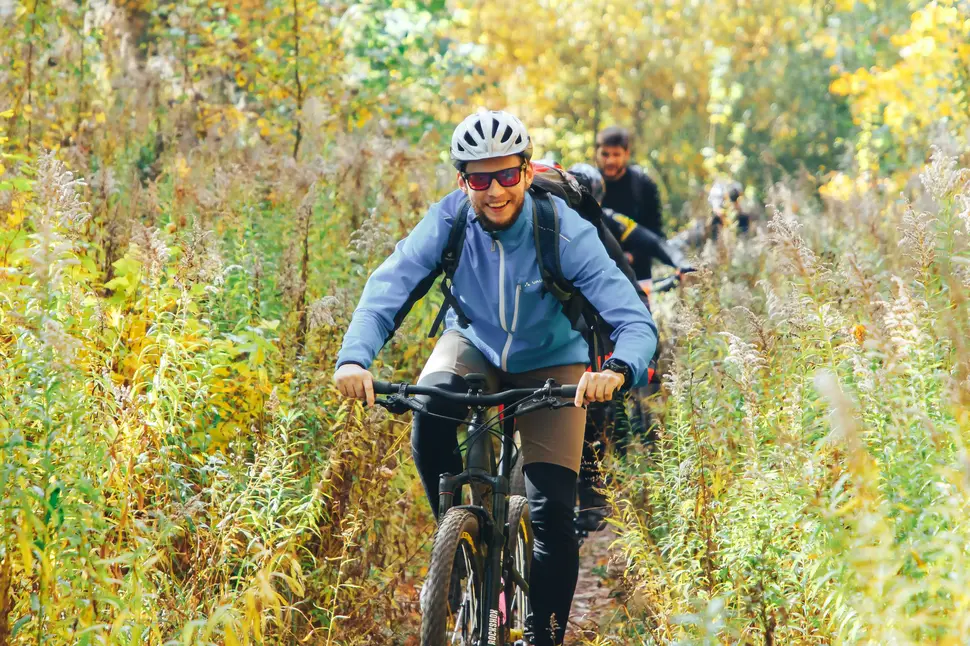
Choosing your first mountain bike is often where motivation meets paralysis.
Choosing your first mountain bike is often where motivation meets paralysis. You want to try the sport. You know you need a bike. But, between the $800 hardtail at the big retailer and the $7,000 machine with a carbon frame and 12-speed electronic shifting, how do you know what you actually need?
The good news: you don't need the most expensive bike to get started. The less good news: there are still some important decisions to make, and some are harder to undo once you've bought.
Here are the 10 tips we give at the counter every week at RST Vélo Sports in Prévost, in the Laurentians. Read them before you come see us — it'll save us both some time.
To understand how mountain biking fits into the options for the region, also check out our guide on what type of bike to choose for riding in the Laurentians.
1. Ride before you buy
This is the advice we wish someone had given us 20 years ago. Most people buy their first bike without having really ridden on trails, then discover after four outings that they would have preferred something else.
The solution: rent a mountain bike for a day or two. It costs a fraction of a bad purchase, and gives you a reference point for understanding what you like. The position. The weight. The travel. Everything becomes concrete.
Many of our serious customers started with a rental. It's the most cost-effective step in the buying process.
2. Understand the main MTB categories
You don't need to become an expert. But having a clear idea of the main categories will prevent you from buying a bike that doesn't match your riding style.
- Cross-country (XC) — light, fast, built for long pedaling sessions. Ideal if your enjoyment comes from endurance and long rides.
- Trail: the most versatile category. Trail bikes perform well on climbs, are fun on descents, and can do everything. It's the default choice for 80% of beginners. We invite you to browse our trail collection.
- Enduro: descent-oriented, heavier, built for technical and demanding trails. Only worth considering if you know you'll be riding challenging terrain.
- Fat bike: for riding in the Laurentians in winter. A category of its own, not a typical entry point. See our fat bike selection.
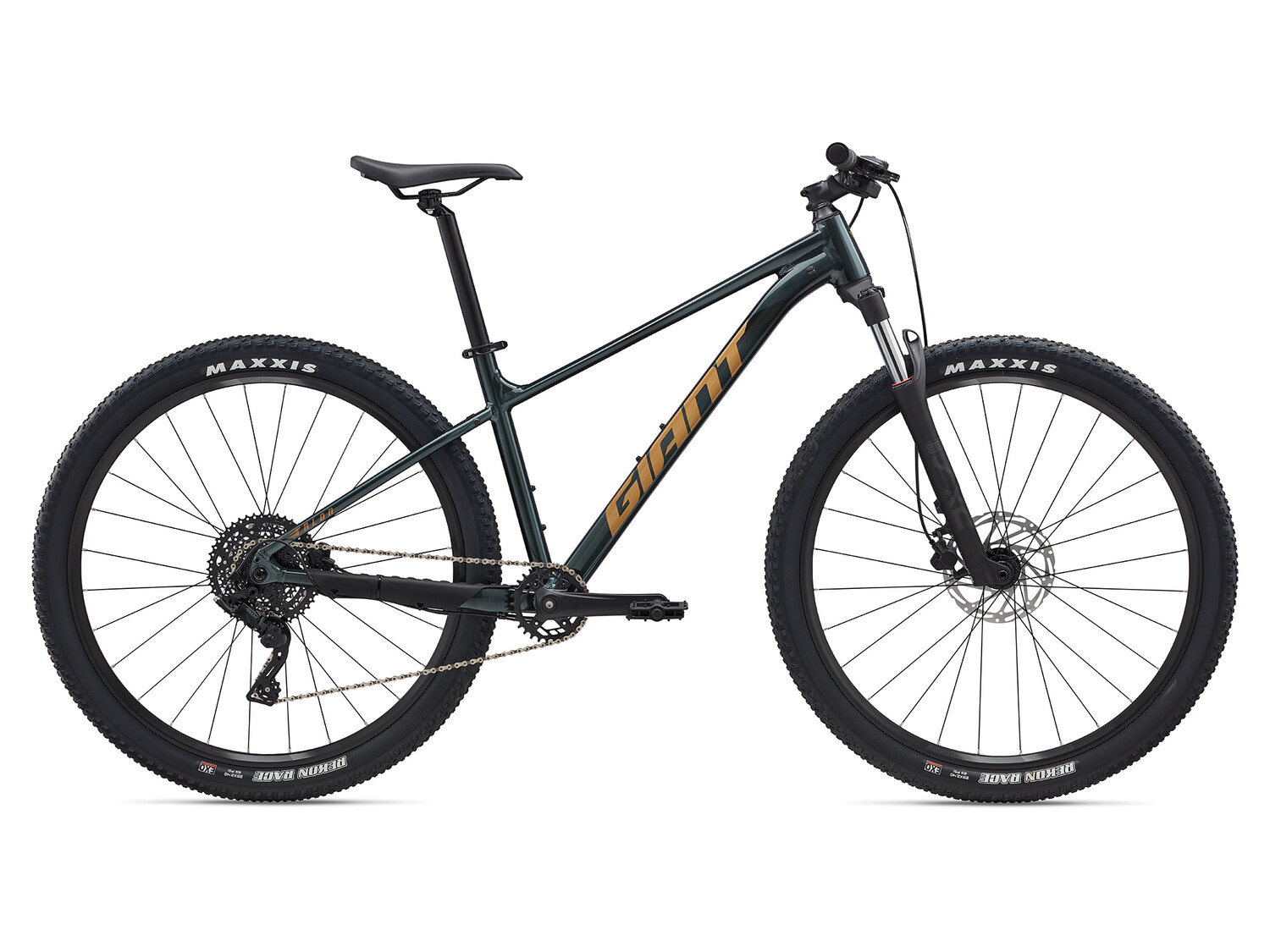
For the majority of beginners: a trail bike. It's the all-rounder that won't hold you back.
3. Hardtail or full suspension?
Real question, real answer: it depends on your budget and your terrain.
Hardtail (front suspension only) — lighter, simpler to maintain, less expensive. Excellent for efficient pedaling and moderately rough trails. At an equivalent budget, you get better components than with a full suspension.
Full suspension (front + rear) — more comfortable, more forgiving on descents, better for rocky and technical terrain. More expensive, heavier, and more parts to maintain.
Our rule of thumb: if your total budget is under $1,500, get a good hardtail. Above $2,000, full suspension starts to be worth the investment, especially if you plan to ride in the Laurentians where the terrain is rocky and demanding.
4. Frame size is non-negotiable
This is probably the most underestimated factor by beginners. A bike that's too big or too small will give you back pain, wrist pain, and above all, it will be difficult to maneuver on descents. You'll fall more often and progress more slowly.
Brands publish their sizing guides, but they're never entirely sufficient. Your body proportions matter: arm length, torso length, leg length. Two people who are 5'9" may need different sizes depending on their build.
Practical advice: try the bike. It's non-negotiable. If you buy online, make sure returns are free. Or better yet: come into the shop — we'll have you try 2–3 sizes in five minutes.
5. Set a realistic budget — for everything, not just the bike
This is the classic mistake: you plan $1,500 for the bike, then discover in the shop that you also need a helmet, shoes, gloves, some tools, pads, maybe a pump and a repair kit.
For a complete and reasonable setup:
- Entry-level bike: $800 – $1,500
- Mid-range bike: $1,500 – $3,500
- Upper mid-range bike: $3,500 – $6,000
- Decent helmet: $100 – $200
- Appropriate shoes: $100 – $250
- Small gear (gloves, glasses, pump, kit): $150 – $300
Add it all up before you start shopping. If your total budget is under $1,000, be realistic: renting may be a wiser option while you save up.
6. Put the money in the right places
At a given budget, some components matter much more than others. The priority order:
- The fork. It's the element that changes the riding experience the most. A bike with a good fork is very forgiving. A mediocre fork makes everything unpleasant.
- The brakes. Hydraulic disc brakes, without exception, for mountain biking. A weak braking system costs you in safety and enjoyment.
- The drivetrain. The number of gears matters less than the quality of the derailleur. A single chainring (1x) setup has become the standard and works very well.
- The wheels. Solid and well-built. You don't need carbon wheels to start, but quality wheels last and roll better.
Pedals and the saddle can always be replaced later. Don't pay for unnecessary carbon if it forces you to compromise on fork quality.
7. The helmet is not a detail
We see it every week in the shop: a scuffed, cracked helmet that saved someone's head. And too often, it's an entry-level helmet that did its job. However, that helmet could have offered better protection.
For mountain biking, get a helmet with a shell that sits lower at the back (trail or enduro style). Ideally with MIPS technology, which reduces rotational forces in a crash. Budget $120 to $250 for a reliable model. The helmet that saves your life should never be the budget compromise.
Replace it every 4 to 6 years, even without a crash — the internal foam degrades over time.
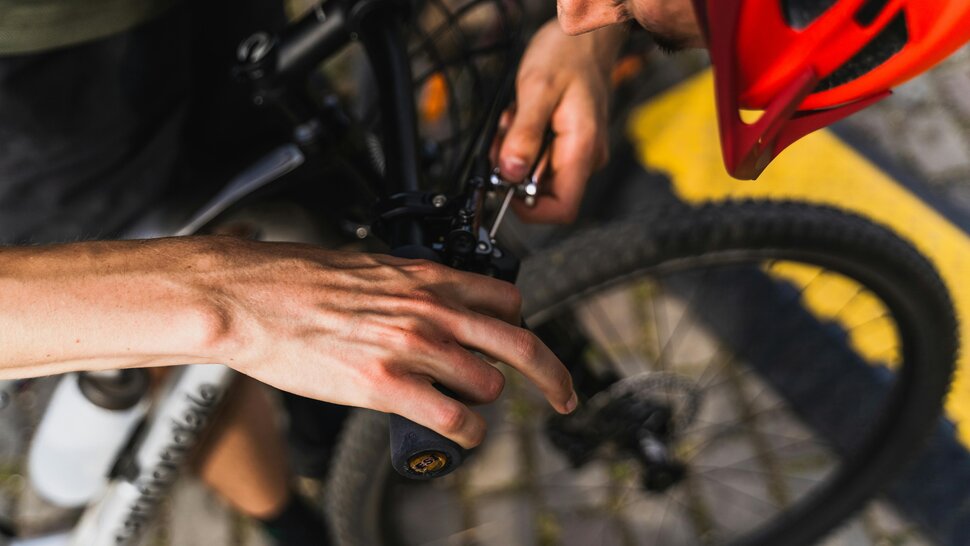
8. Buy from a retailer that does maintenance
Buying from an online retailer or a big box store with no workshop often means saving $200 on the purchase price, then spending $400 on maintenance in the first year because the chain was never properly tensioned or the brakes weren't bled correctly.
A mountain bike needs ongoing care: suspension adjustment, chain tension, brake bleeding, wheel alignment. Most of these need to be done within the first 6 months.
At RST, we have a full workshop and our technicians know the brands we sell. That's what turns a good bike into one that lasts 10 years.
Our bike preparation guide for the season also gives you a sense of the minimal upkeep to plan for.
9. Start on the right trails
A beginner who ends up on a black diamond trail on their first outing will put their bike away for the season. Start on green or blue trails, ideally well-groomed and clearly marked.
In the Laurentians, we're lucky to have progressive trail networks: Mont Loup-Garou in Sainte-Adèle, Parc du Mont-Tremblant, Bois de Belle-Rivière, Parc régional Val-David–Val-Morin. Each centre offers a range of difficulty levels.
[Our guide to the best mountain bike trails in the Laurentians in 2026 is a great starting point for planning your first rides.]
The idea: get out 10 times on trails where you're improving, rather than once on a trail that discourages you.
10. Ride with someone, or take a lesson
Mountain biking is a technical sport. Body position on descents, braking, reading the terrain, managing tire pressure — all of this is better learned with someone who knows what they're doing, not through trial and error on your own.
Two options: find a more experienced friend, or take a lesson. At RST, we offer cycling lessons to get you started with the right habits. It's 2 hours that can save you six months of bad technique.
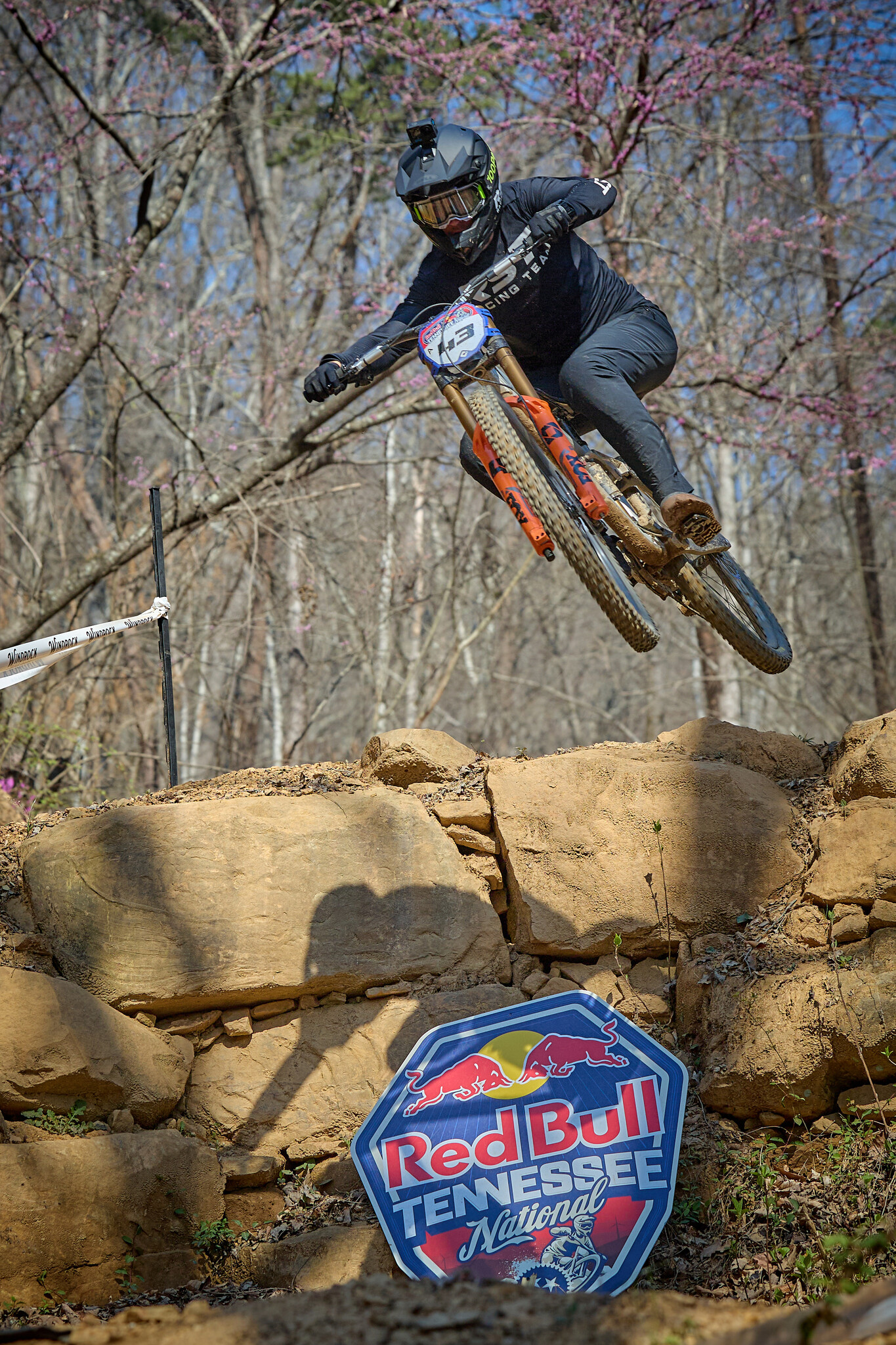
The basic technical skills — how to position yourself, where to look, how to modulate the rear brake — make a bigger difference than the bike itself. That's easy to forget when you're shopping for gear.
FAQ
What is the best MTB for a beginner? A hardtail or entry-to-mid-range full suspension trail bike is recommended for beginners. The brand matters less than the overall coherence of the build: a decent fork, hydraulic brakes, 1x drivetrain. Our core advice: try before you buy.
How much should I spend on a first mountain bike? For a complete setup, budget $1,200 to $2,500 for a good entry-level bike plus minimal gear. Below $800 for the bike alone, you risk getting something that won't hold up to actual trail riding.
Do you need full suspension to start? Not necessarily. On a tight budget, a good hardtail gives you more for your money. Full suspension becomes worthwhile when your usual terrain is rocky and technical — which is often the case in the Laurentians.
Which wheel size to choose: 27.5 or 29 inches? For adults, 29 inches has become the standard — better traction, easier rollover, higher rolling speed. 27.5 remains relevant for shorter riders or those who want a more playful, nimble bike.
Is it better to buy new or used? Used can be a great deal, but only if you know what you're looking at (suspension condition, drivetrain wear, frame condition). A beginner without a reference point should buy new, or bring someone along who can inspect the bike in person.
How long does it take to get used to a new bike? Allow 4 to 6 rides before the bike starts to feel instinctive under you. Real progression begins after that.
Our invitation
If you're shopping for your first mountain bike, stop by our shop in Prévost or contact us. We'd rather spend 30 minutes understanding your riding style, your budget, and your terrain to point you toward the right bike, than sell you an overpriced machine you'll regret.
View all our mountain bikes or book a rental to try before you buy.
Have a great season.
Recent articles
View all
How to Choose the Right Bike in 2026: A Guide by Riding Style
Gravel vs Road Bike: Which One Should You Choose for the Laurentians?