Electric Bike Maintenance: What You Really Need to Do (vs. a Regular Bike)
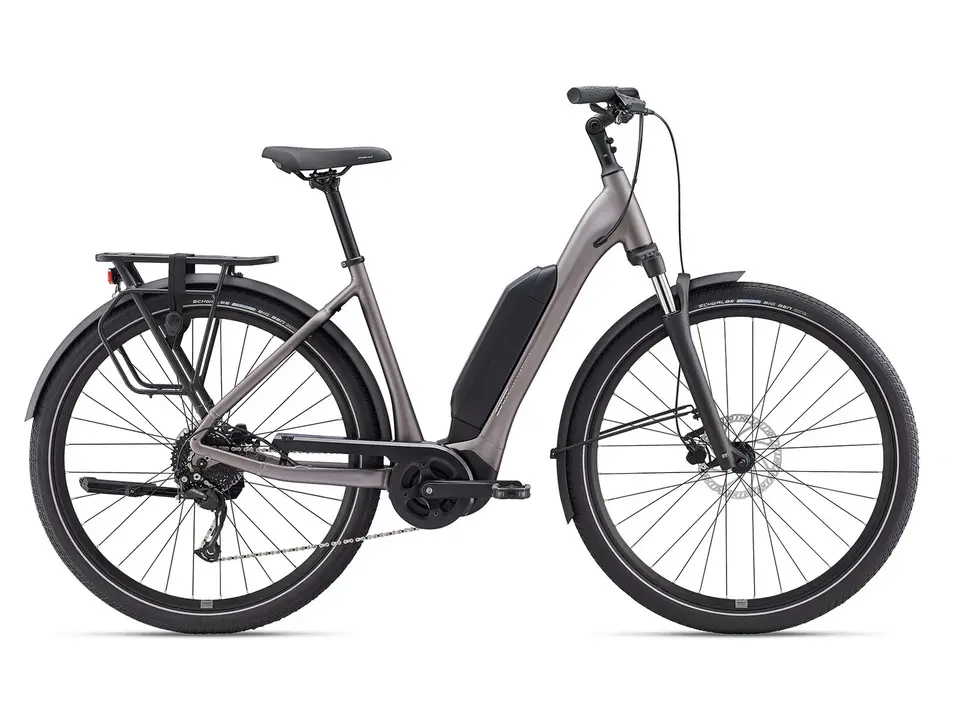
An e-bike looks a lot like a regular bicycle, but the mechanical (and electronic) reality changes things considerably. From the very first kilometers, electric bike maintenance stands apart due to the presence of a motor, a battery, and sensors that require specific care. In this guide, we cover the essentials of e-bike maintenance and the key differences between maintaining an electric bike vs. a regular bike, so you can ride longer, more safely, and with better performance.
Whether you use your e-bike for daily commuting, touring, or sport riding, the best practices below will help you reduce wear, avoid breakdowns, and preserve the value of your bike.
Why Electric Bike Maintenance Is Different
On a standard bike, maintenance revolves mainly around the drivetrain, brakes, tires, and steering. On an electric bike, these elements remain critical — but they're subjected to greater stress:
- Greater weight: battery + motor = more inertia, meaning more wear on brakes, tires, wheels, and suspension.
- Motor torque: the additional traction accelerates wear on the chain, cassette, and sometimes the chainring.
- Electronics: connectors, sensors, display, wiring, and software updates can all affect reliability.
- Energy management: battery care is a chapter in its own right (storage, charging, temperature, charge cycles).
The result: maintaining an e-bike isn't necessarily more complicated, but it needs to be more regular and more methodical.
Comparison Table: Regular Bike vs. Electric Bike Maintenance
| Maintenance Item | Regular Bike | Electric Bike | Key Difference |
|---|---|---|---|
| Chain Cleaning | Every 200–400 km (or after rain/mud) | Every 150–250 km (more often in city/rain) | Motor torque increases dirt and abrasion: e-bike maintenance must be more frequent. |
| Chain Wear | Check every 800–1200 km | Check every 500–800 km | Wear is often faster: a worn chain is costly (cassette/chainring) on an e-bike. |
| Brake Pads | Check every 4–8 weeks depending on use | Check every 2–4 weeks (weight + speed) | More mass = more heat and wear: use components suited for e-bikes. |
| Tire Pressure | Weekly check (or before long rides) | 1–2×/week check (or every 2–3 trips) | Underinflation = risk of pinch flats + reduced range: key for e-bike maintenance. |
| Battery / Power | N/A | Regular checks: charging, storage at 60–80% if possible, avoid extreme hot/cold | E-bike battery care directly affects range and lifespan (costly component). |
| Connectors / Electronics | N/A (except lights/computer) | Monthly visual inspection + after heavy wash/rain; firmware update / diagnostic if issues | Sensitive cables/ports: bad connection can cut motor assistance (big e-bike maintenance difference). |
| Full Service | Once per year (or 1500–3000 km) | Once per year (often 1000–2500 km) + electrical system check | Mechanical service plus diagnostics, firmware updates, and e-bike-specific safety points. |
Basic Checks (Common to Both Bikes) You Shouldn't Overlook
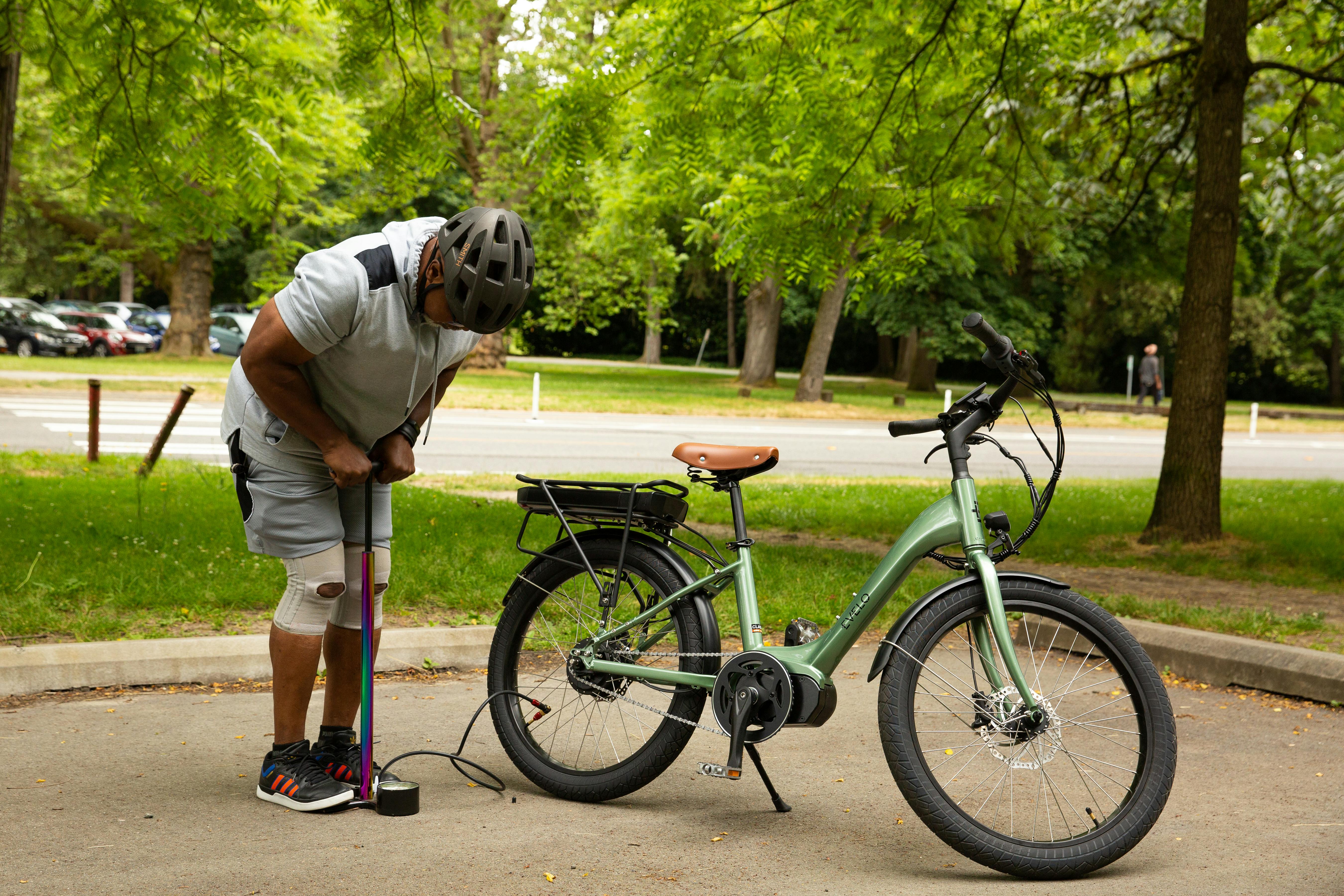
Before getting into the electrical specifics, let's revisit the fundamentals. They remain the same, but their frequency is often higher on an e-bike.
Tire Pressure and Condition
Since an e-bike is heavier, riding under-inflated increases the risk of pinch flats, rolling resistance, and battery consumption. Check pressure every week (or every 2–3 rides with intensive use) and inspect the sidewalls for cuts and bulges.
Brakes: Power and Endurance
More mass + higher average speeds = more braking demand. Check pad thickness, disc condition, and lever feel. If you notice noise, vibration, or reduced bite, replace consumables promptly.
Drivetrain: Cleanliness and Lubrication
An e-bike chain works harder, especially if you frequently start in high assist mode. Clean and lubricate more often (typically every 150–250 km depending on conditions). Also measure chain stretch: a worn chain damages the cassette and increases maintenance costs.
To stock up on degreaser, lubricant, brushes, and tools, explore our selection of bike maintenance products.
E-Bike Specifics: Motor, Sensors, and Connectors
The big difference in electric bike maintenance is the presence of an assist system. Even though most modern motors are well-sealed, a few good habits make a real difference.
Cleaning: Avoid High-Pressure Jets
Washing with a pressure washer can force water into bearings and connectors. Instead, use:
- a gentle rinse (low pressure),
- a sponge or brush,
- a microfiber cloth to finish.
Tip: protect the display and charge/connection ports during cleaning, then dry thoroughly.
Check Connectors and Cables
Inspect regularly:
- the speed sensor cable (magnet on spoke or disc depending on model),
- motor and battery connectors (play, oxidation, moisture traces),
- the cable bundle near the handlebar (twisting, pinching).
A poorly seated connector can cause intermittent assist cut-outs, often mistaken for a motor fault.
Updates and Diagnostics
Some systems (Bosch, Shimano, Brose, Yamaha, etc.) receive updates that improve assist management or fix bugs. If you notice an unexplained drop in range or erratic behavior, a workshop diagnostic can identify:
- sensor errors (torque, speed, cadence),
- battery imbalance,
- non-optimal assist settings.
Battery: The Golden Rules of E-Bike Battery Care
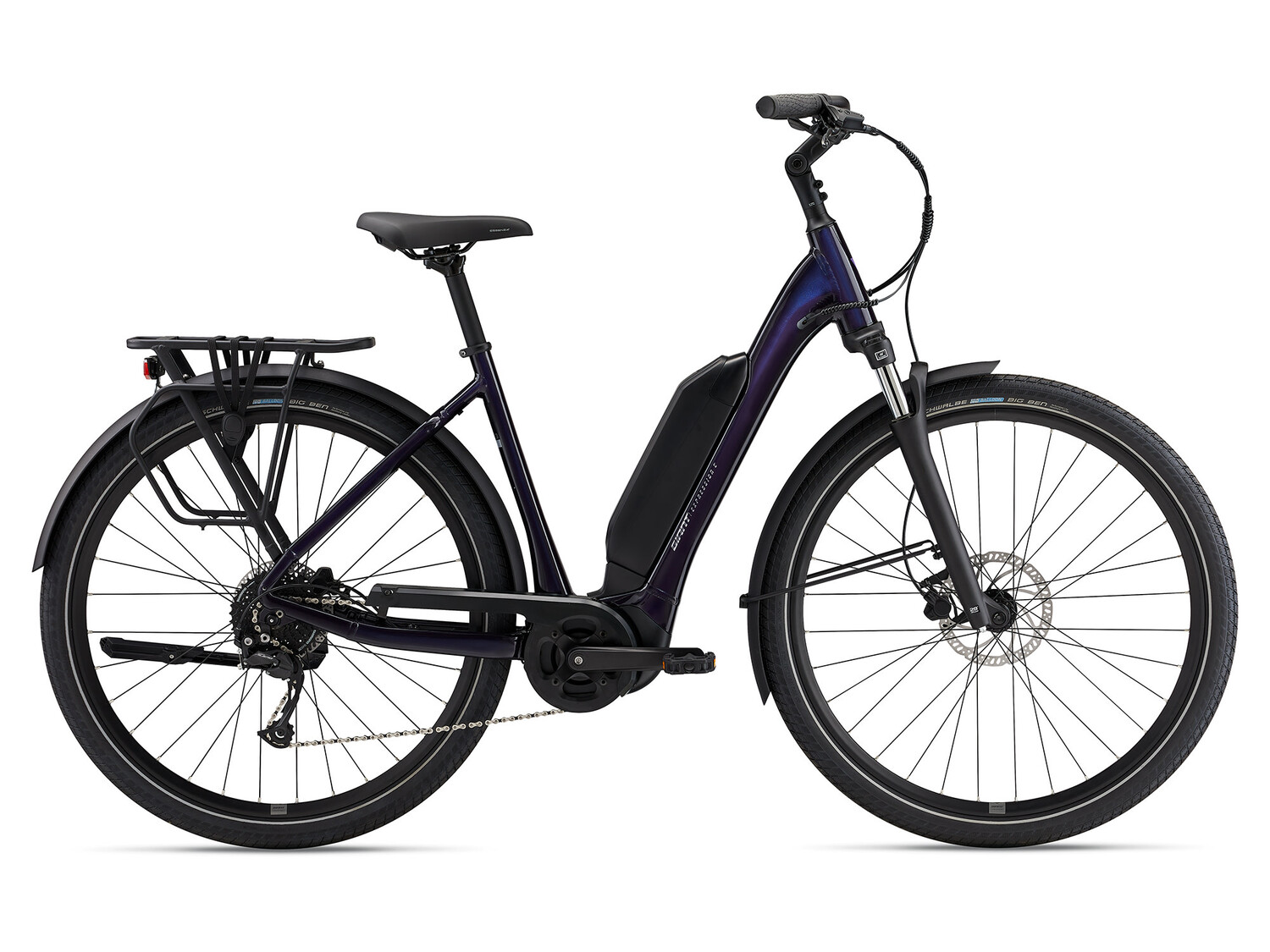
The battery is the most expensive component of an e-bike. Proper battery maintenance extends its lifespan and keeps range stable across seasons.
Charging: Avoid the Extremes
- Avoid leaving the battery at 0% for extended periods: recharge as soon as possible.
- Avoid keeping it constantly at 100% for days at a time (if your system allows storage at 60–80%, that's ideal).
- Always use the original charger and a reliable outlet.
Temperature: The Silent Enemy
Cold temporarily reduces range; heat accelerates aging. Best practices:
- In winter, store the battery indoors and don't charge it when it's frozen (let it return to room temperature first).
- In summer, don't leave it in direct sunlight, in a car, or against a sun-facing window.
Long-Term Storage (Off-Season)
If you're not using your e-bike for several weeks:
- Store the battery at around 60% charge (commonly recommended).
- Keep it in a dry, temperature-controlled location.
- Check the level every 1–2 months and top it up slightly if needed.
For more on the factors that affect range, check out our guide to optimizing your battery range.
Braking: Pads, Discs, and More Frequent Bleeding
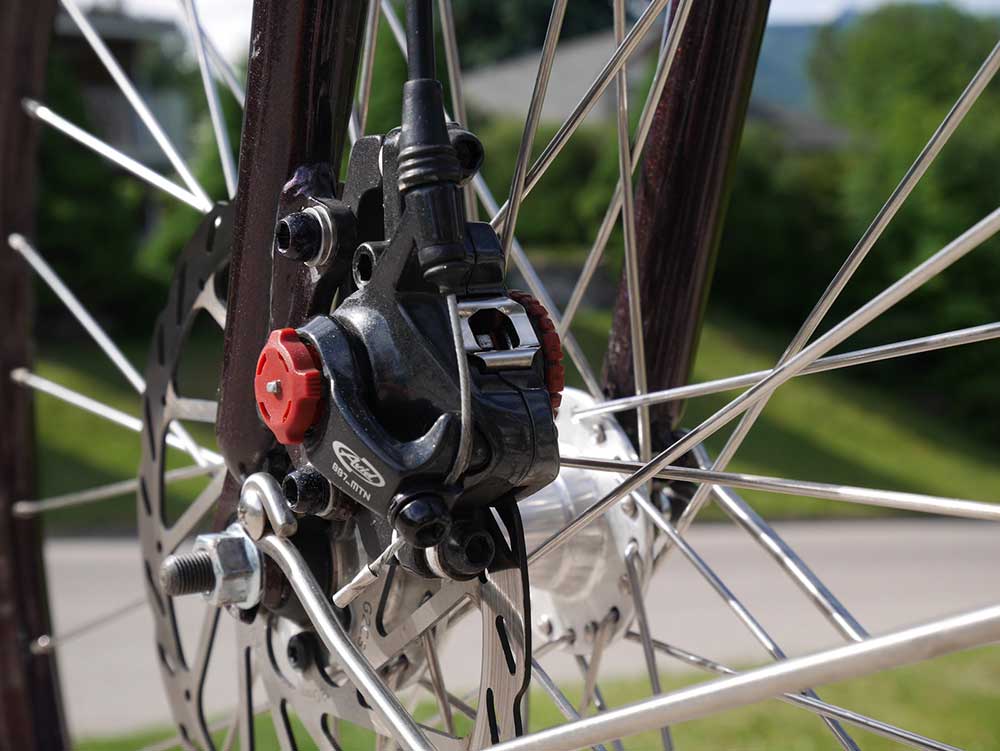
On an e-bike, brake wear is often faster — especially in the city (frequent stops) or in the mountains (long descents). E-bike maintenance therefore means monitoring your braking system more regularly than on a regular bike.
Why Dedicated Consumables Can Help
E-bikes generate more heat during braking. Pads designed to better dissipate heat and handle greater stress improve consistency and longevity. If you need a suitable replacement, explore our e-bike-specific brake pads.
Signs That It's Time to Act
- Metallic noise (pad wear indicator),
- increasing lever travel,
- spongy braking feel (possible need for bleeding),
- vibrations (warped disc or contaminated pads).
Drivetrain: Chain, Cassette, and Good Riding Habits
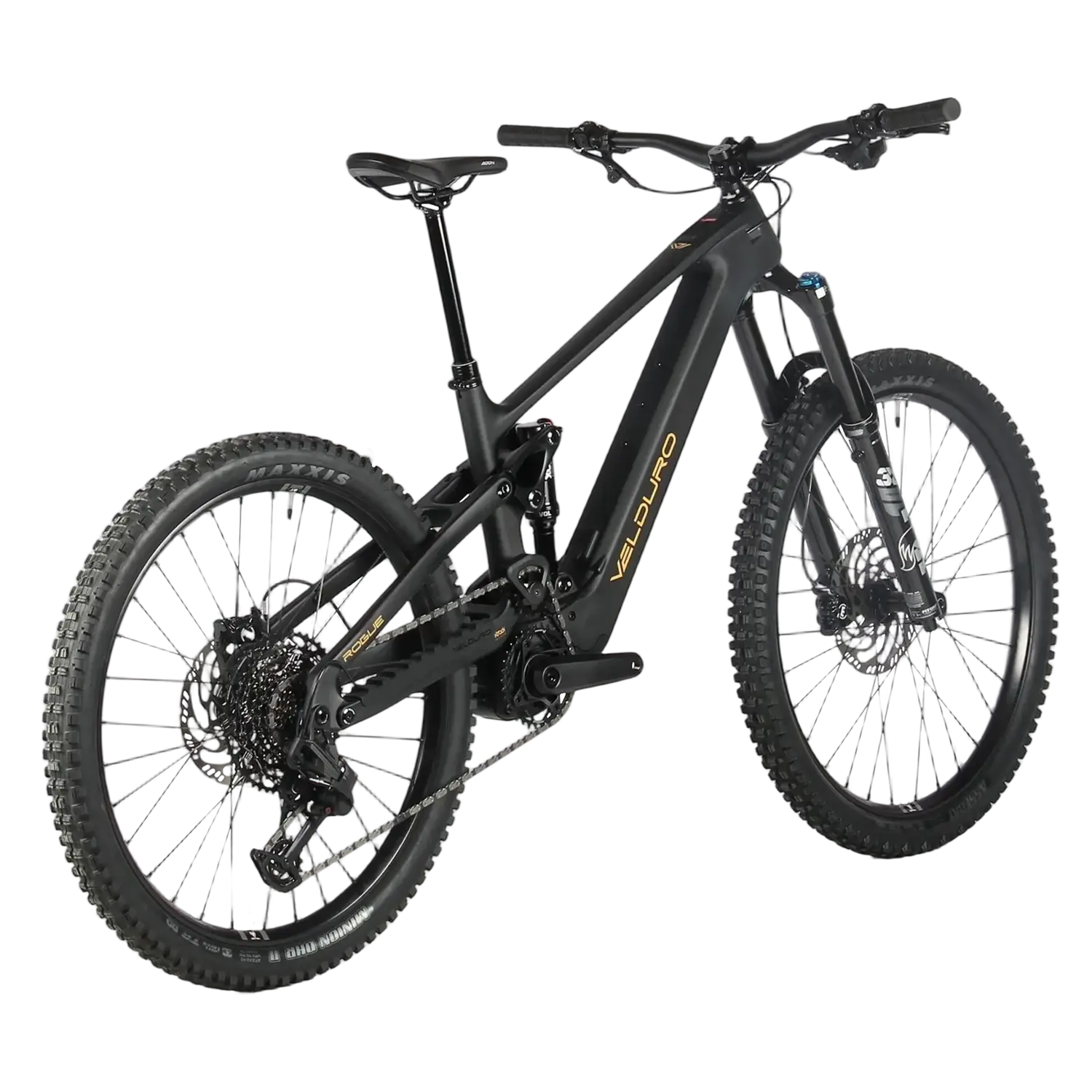
Motor torque can "eat through" the drivetrain if you combine maximum assist + big gear + hard starts. E-bike maintenance is as much about how you ride as it is about cleaning.
Good Habits to Limit Wear
- Anticipate gear changes: shift before a climb, not while the motor is pushing hard.
- Ease off pressure slightly when shifting to protect the chain and cassette.
- Clean more often if you ride in the rain: the mix of water and dust becomes abrasive.
Recommended Frequency (Simple Reference)
- Cleaning + lubrication: every 1–2 weeks with daily use.
- Chain wear check: every 4–6 weeks (or every 500–800 km).
Wheels, Spokes, and Suspension: Weight Matters
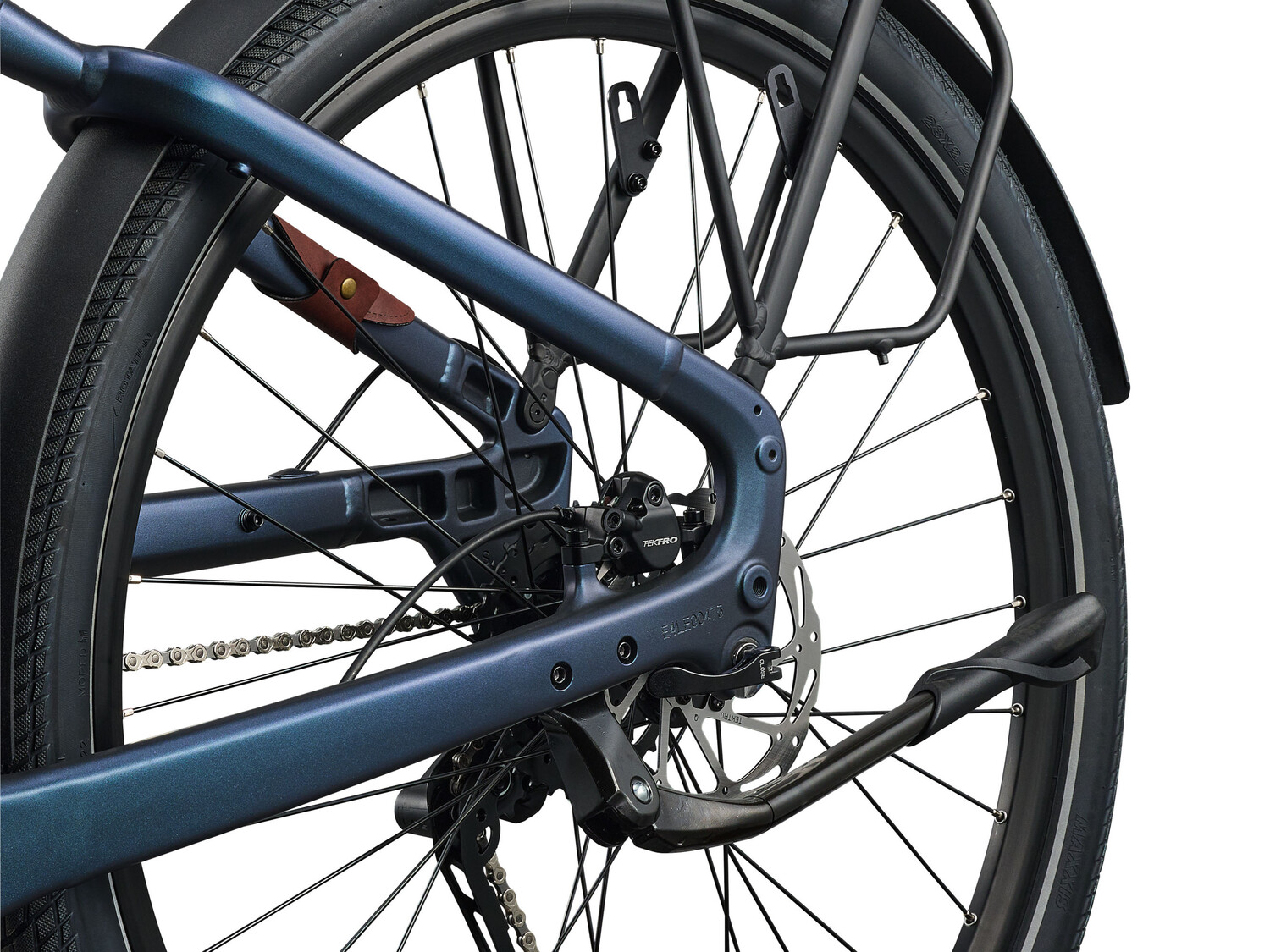
The extra weight places greater demand on the wheels. Check:
- spoke tension (a loose spoke can cause a wobble),
- rims (impacts, cracks),
- bearings (play, creaking).
If your e-bike is full-suspension, follow the suspension maintenance schedule as well (cleaning the stanchions, checking seals, periodic servicing). Neglected suspension degrades handling and accelerates tire and brake wear.
E-Bike Maintenance Checklist: How Often?
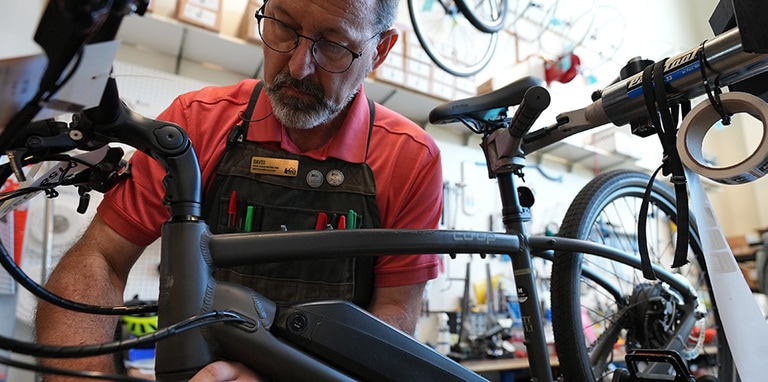
Here's a simple checklist to structure your electric bike maintenance:
Before every ride (2 minutes)
- Tire pressure (by feel + regular gauge check)
- Quick brake test
- Battery level and proper connection
Every week
- Light cleaning (frame, drivetrain if needed)
- Chain lubrication
- Visual inspection of cables/connectors
Every month
- Check pad wear + disc condition
- Measure chain wear
- Check play in headset/wheels/bottom bracket
Every 6–12 months (depending on use)
- Brake bleeding (if needed)
- Drivetrain service (cables, housing, derailleur pulleys)
- Electrical system diagnostic/update at a workshop if symptoms are present
Choosing the Right Bike and Accessories to Reduce Maintenance
An e-bike well-matched to your riding style will need fewer corrections and hold up better over time: properly sized brakes, robust tires, e-bike-compatible drivetrain, and so on. If you're comparing models or looking for your next e-bike, browse our electric bike collection.
And for all things cleaning, lubrication, and consumables, keep reliable products on hand: the right chemistry (degreaser/lubricant) often makes the difference between a silent drivetrain and accelerated wear.
Conclusion: Ride More, Repair Less
The difference in electric bike maintenance comes down to three pillars: brakes under greater stress, a drivetrain more exposed to torque, and a battery and electronics that need to be managed intelligently. By adopting a simple routine (short but frequent checks), your e-bike will stay performing, reliable, and enjoyable — season after season.
Ready to take action? Stock up on essentials with our bike maintenance products, upgrade your braking with e-bike-specific brake pads, and explore our electric bike range to find the model perfectly suited to your riding style.
Recent articles
View all