Trail vs Enduro: Which mountain bike should you choose based on your skill level?
Trail, enduro, all mountain, XC — when you start seriously shopping for a mountain bike, the terminology gets old fast. But behind these words lies a very practical question: which bike will actually work for me?
If you ride in the Laurentians, in Prévost, at Mont-Tremblant, or on the Corridor Aérobique, you've seen riders on very different machines tackling similar trails. That's normal. The right bike depends less on the trail than on how you approach it. Our guide on what type of bike to choose for riding in the Laurentians can also help you figure out where your riding fits.
What's the difference between a trail MTB and an enduro MTB?
The trail bike is built for balanced riding: as much climbing as descending, on technical but accessible trails. 120 to 140 mm of travel, neutral geometry, reasonable weight. The enduro bike is built to descend fast. Aggressive geometry, 150 to 170 mm of travel (sometimes more), reinforced frame. It can climb, but that's clearly not where it's happiest.
The two categories, straight up
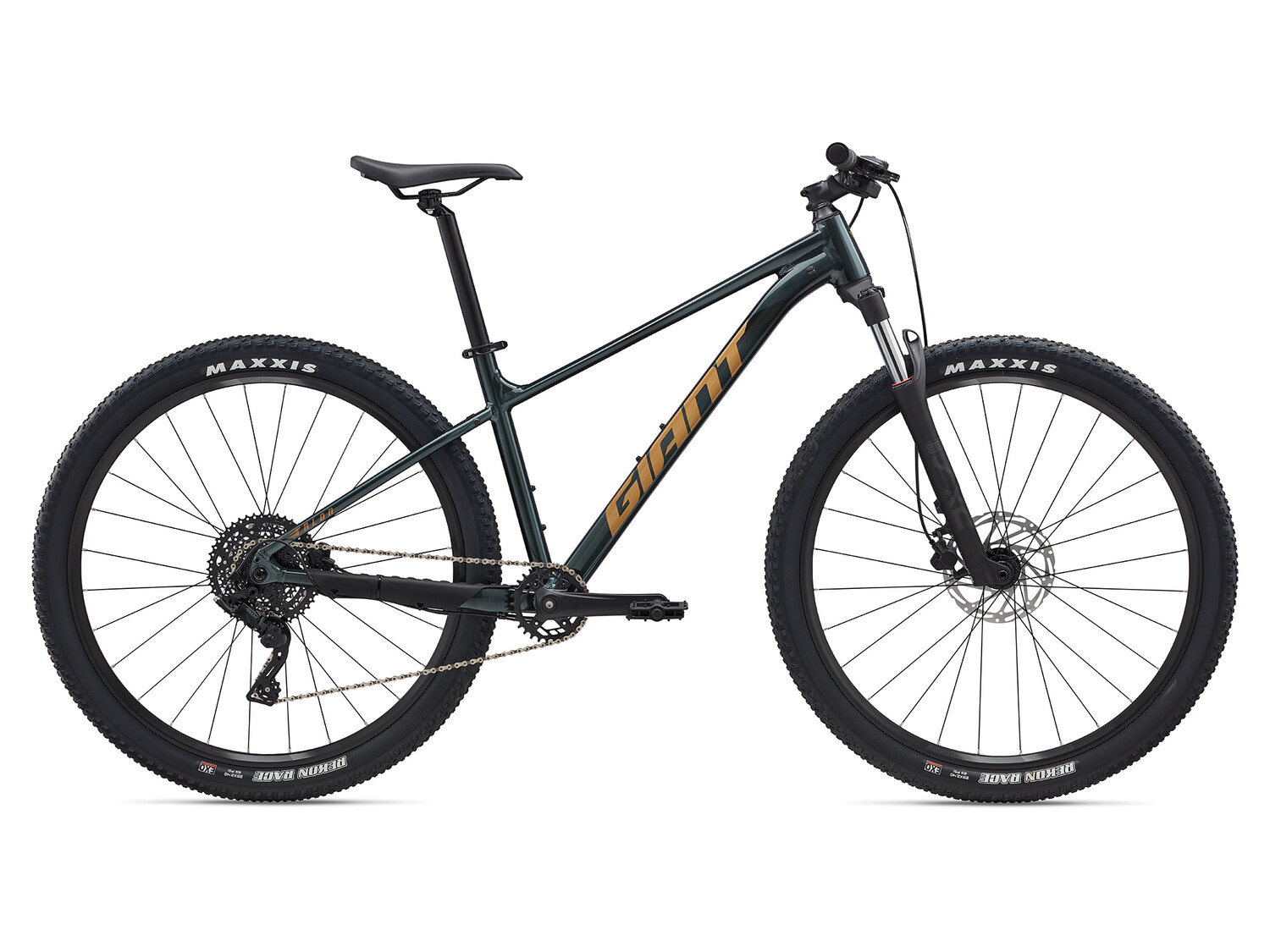
The Trail MTB
The trail bike is the most common mountain bike among recreational riders — not because it's the flashiest, but because it handles most situations without a fight.
Typical specs:
- Front/rear travel: 120 to 140 mm
- Balanced geometry — comfortable climbing, playful descending
- Lighter than an enduro
- Mid-knob tires, good traction/efficiency compromise
- Available in full suspension or hardtail
On a well-set-up trail bike, you'll enjoy riding reds and blacks while staying comfortable on flat sections and connectors. It's the bike that will never make you want to head home early.
The Enduro MTB
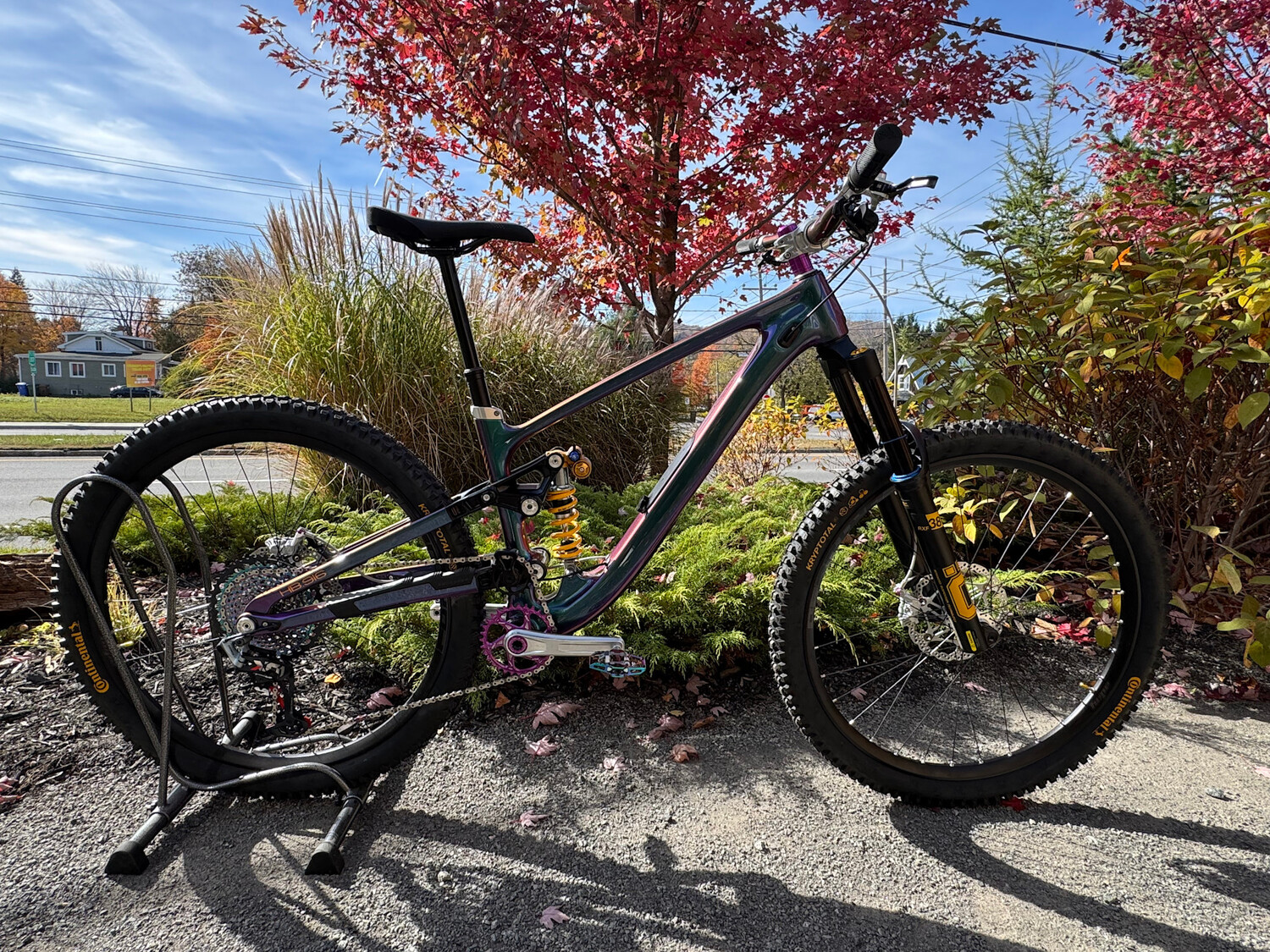
Enduro comes from a race format where descents are timed but climbs aren't. That pretty much sums up the philosophy: you pedal to reach the descents, not for the joy of pedaling.
Typical specs:
- Front travel: 160 to 180 mm
- Rear travel: 140 to 170 mm
- Long geometry, slack head angle
- Reinforced frame and components — heavier
- Wide tires, soft compound, aggressive knobs
- Almost always full suspension
An enduro can climb, unlike a pure DH bike, but it takes more effort going up. On rough, rocky, or steep descents, it inspires a level of confidence a trail bike simply can't quite match.
Trail vs Enduro: the comparison table
| Criteria | Trail MTB | Enduro MTB |
| Front travel | 120–140 mm | 160–180 mm |
| Rear travel | 120–140 mm | 140–170 mm |
| Weight | Lighter | Heavier |
| Geometry | Neutral / balanced | Aggressive — descent-oriented |
| Climbing | Good | Acceptable |
| Descending | Very good | Excellent |
| Terrain | Singletrack, forest, parks | Technical trails, bikepark, mountain |
| Level | Beginner to advanced | Intermediate to expert |
Which profile sounds like you?
Forget the specs for a minute. Here are four typical rider profiles — your ideal bike usually falls somewhere in here.
The active trail rider
You head out for two or three hours, you enjoy complete rides with climbs and descents, and you come back satisfied from covering real terrain. Technique interests you, but it's not your only motivation. You mostly ride blues and reds, forest trails, the Corridor Aérobique.
Your bike: Trail. A 130–140 mm full suspension covers all of that without any frustration, for years. Browse our Trail bikes at RST Vélo Sports.
The descent-focused rider
You climb because you have to, but what motivates you is what's waiting at the bottom. You want speed, technical features, and a bike that stays stable when things get rowdy. You spend time on blacks, bikeparks, and the more committing zones of the Laurentians.
Your bike: Enduro. With 160 mm of travel, you'll have the confidence to push without holding back. Browse our Enduro bikes at RST Vélo Sports.
The beginner looking to progress
You're new to the trails, or coming back after a long break. You don't know yet which direction your riding will go, and that's fine.
Start with a trail bike. It forgives more mistakes, climbs without punishing you, and descends with enough fun to keep you coming back. If two seasons from now you're dreaming of more aggressive descents, you'll know it's time to look at enduro. An entry- or mid-range trail bike is the most sensible investment for learning without fighting your bike.
Your bike: Trail.
The rider who wants to do it all
You love long rides with plenty of elevation, but you don't want to be bored on demanding descents either. Maximum versatility.
Look at what sits between trail and enduro — often called "all mountain" or "aggressive trail" depending on the brand. With 140–150 mm of travel and geometry leaning a bit more toward descending, these bikes often deliver on that promise. Come see us in the shop and we'll identify the right balance based on your trails and your budget.
Your bike: High-end Trail or All Mountain.
Can you do enduro on a trail bike?
Technically yes. A 140 mm trail bike can handle an enduro race if the course isn't too demanding. But your safety margin on descents will be thinner, and your speed lower. For casual riding on blacks, it works. For seriously progressing on technical features, an enduro makes a real difference.
FAQ
What's the difference between a trail MTB and an enduro? The trail bike is lighter and more versatile, designed to balance climbing and descending. The enduro is more robust, heavier, and optimized for descending with greater suspension travel.
Which MTB should a beginner choose for mountain riding? A full-suspension trail bike. It forgives mistakes, climbs without forcing, and descends with enough fun to keep you motivated.
Is an enduro accessible at an intermediate level? Yes, if you ride regularly and aggressive descents are what drives you. The main risk is finding the climbs exhausting and draining if your rides involve a lot of elevation gain.
Which MTB is best suited to the Laurentians trails? A trail bike easily handles 80% of the region's trails. For more demanding zones — black trails and bikeparks — an enduro MTB is particularly well suited. See also our best Laurentians trails in 2026.
What about an electric enduro MTB? It's a great option for those who want to enjoy the descents without suffering on the climbs, or for group rides with mixed fitness levels. [Read: Electric MTB vs traditional mountain bike.]
Trail or enduro — how do you choose?
It's not a question of budget or brand. It's a question of how you ride.
If you want a bike that does everything — long rides, varied trails, building technique — get a trail bike. If descending is your priority and climbing is just the price you pay to get there, enduro is the right call.
Either way, come see us in Prévost. We'll ask you three questions, look at your budget, and find the bike that truly matches what you're after on the trails.
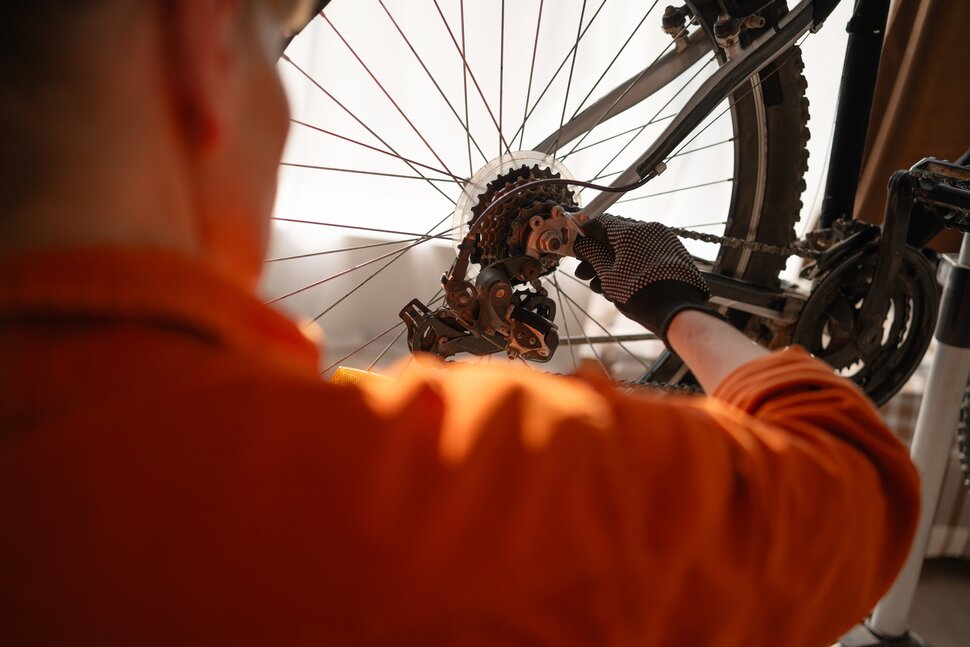
Before you head out, take a look at our seasonal maintenance guide — a bike that starts the season properly tuned makes all the difference.
Articles récents
Tout afficher
Les meilleures routes gravel dans les Laurentides
Comment choisir le bon vélo en 2026 : guide par type d'utilisation